
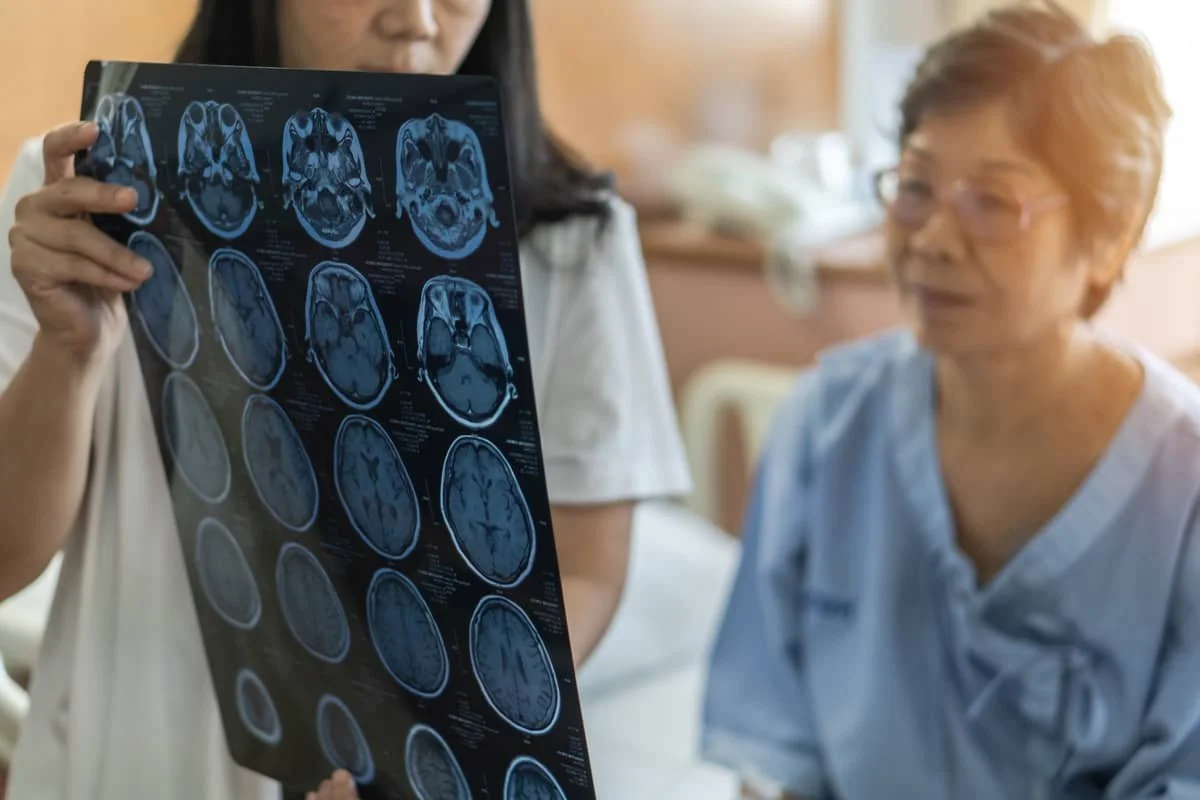
It was estimated that there were over 40,000 stroke events in Australia in 2023 alone (Source:AIHW). This emphasises the importance of understanding and recognising the signs and symptoms of a stroke and how it can affect your health, including your vision.
Often when people think of strokes they may think of slurred speech, confusion, limb weakness or facial drooping- but how many people think about the vision changes we can experience during and after a stroke? Many people are surprised that a stroke can affect vision. We want to bring awareness to stroke-related vision loss and how to treat and manage it.
In this blog, we will explore and discuss how stroke affects vision and highlight the importance of early neuro-optometry evaluation and treatment after someone experiences a stroke.
Key Summary:
Strokes occur when the brain does not receive adequate oxygen.
Without enough oxygen, parts of the brain can be damaged; temporarily or permanently.
A significant portion of the brain controls vision.
If a stroke damages the brain’s visual processing center, optic nerves and visual pathways, or brain stem, it can cause significant vision issues.
A stroke can cause a range of vision problems, including double vision, higher-order visual processing issues, and visual field loss.
Difficulty seeing can be an early indicator of a stroke, and vision problems can also develop as a result of a stroke.
Early visual assessment and treatment following a stroke can improve outcomes and quality of life.
What is a Stroke & How It Affects Vision
A stroke is caused by a lack of oxygen supply to the brain. Without enough oxygen, damage occurs to this part of the deoxygenated brain. A stroke can affect either side of the brain, both of which are involved in visual processing.
One-third of our brain is responsible for vision (Source: Salk Institute for Biological Studies). Our eyes send ‘visual input’ (aka- what we are seeing) to our brain through visual pathways. Our brain then processes this visual input and produces images of what we are looking at with our eyes.
How Does a Stroke Affect Vision?
If a stroke damages a part of the brain associated with vision, an individual’s sight can be significantly affected and this stroke-related vision loss can be temporary or permanent. Vision issues affect approximately 60% of stroke survivors (Source: IVIS study)
The severity of the stroke
The part of the brain that was affected
The amount of time that goes by between the stroke and post-stroke evaluation and treatment. (This study found that recovery was higher in the first month following a stroke. Source: Marian Brady, 2013)
How long blood flow was interrupted during the stroke
Type of vision loss and symptoms experienced
Types of Vision Loss After a Stroke
Some of the ways a stroke may affect vision loss include:
Eye Movement Problems:A stroke can affect your eye’s ability to focus or coordinate eye movements due to damaged oculomotor muscle innervating nerves and/or sympathetic and parasympathetic nerves. When the eyes do not work together as usual, it can cause double vision, eye misalignment, blurry vision, pupils response changes, or ocular misalignment (‘crossed eyes’).
Droopy Eyelids (Ptosis): Damaged motor and smooth muscle innervating nerves can lead to droopy eyelids. This can also subsequently lead to dry eye syndrome development due to reduced blinking or insufficient eyelid closure when asleep.
Visual Field Loss:The visual field refers to the entire area that can be seen when we focus our eyes on a single point. A stroke can result in the loss of part of this field of vision, often in both eyes.
A stroke can cause the loss of vision in the left or right half of the visual field (Homonymous hemianopia). It can also cause Quadrantanopia, the loss of a quarter of the visual field. A stroke can also lead to a scotoma, a blind spot in one or both eyes.This can create a significant reduction in quality of life and functional outcomes (Source: ScienceDirect).
Nystagmus: Certain stroke injuries can result in rapid, uncontrollable eye movements. This can cause wobbly or blurry vision.
Visual Tracking: Difficulty tracking slow-moving objects.
Cortical blindness: Damage to the occipital lobe can result in cortical blindness. Individuals with cortical blindness have healthy eyes and normal pupil reactions. However, the brain cannot process visual images normally, leading to significant vision loss
Sensitivity to Light (Photophobia): The brain may struggle to adjust to changes in light levels after a stroke.
Higher-Order Visual Processing Loss After a Stroke
Certain brain processes are classified as “higher order”. These processes include problem solving, information processing, and critical thinking. Damage during a stroke can affect areas of the brain that control higher-order visual function.
This may include:
Visual Hallucinations: People who experience vision loss after a stroke may see objects, colours, shapes, or patterns that aren’t actually there. This can resolve with time but is often quite distressing to individuals, especially if they don't understand why.
Visual Neglect: When the eyes and brain do not properly process stimuli from a portion of the visual field. This can result in an individual being unaware of stimuli or objects on one side of their body.
Agnosia: Difficulty recognising objects and/or people
Learn more about the close connection between vision and cognitive function in our guide here: How Vision Loss Affects Cognitive Function.
Why Do Visual Changes Happen After a Stroke?
As discussed earlier, during a stroke, the lack of oxygen can cause damage to the areas of the brain involved in visual processing. The areas of your brain that control visual processing include:
Occipital Lobe: The brain’s main visual processing center
Brain Stem: Controls eye movements and balance
Oculomotor nerves: Nerves that control eye movement
Optic Pathways: Neutral routes that transmit visual signals from the eye to the brain
Sympathetic & parasympathetic nerves: stimulate motor & smooth muscles within the eye (iris) and around the eye (eyelids)
Vision changes due to a stroke depend on:
The severity of the stroke
The part of the brain that was affected
The amount of time that goes by between the stroke and post-stroke evaluation and treatment. (This study found that recovery was higher in the first month following a stroke. Source: Recovery From Poststroke Visual Impairment - Myzoon Ali, Christine Hazelton, Patrick Lyden, Alex Pollock, Marian Brady, 2013)
How long blood flow was interrupted during the stroke
Type of vision loss and symptoms experienced
How to Manage and What Treatments Help Restore Vision After Stroke
We want to stress how important it is to seek professional post-stroke care. Contact your optometrist or neurologist to seek post-stroke evaluation and treatment. A neuro-optometrist can examine your eyes and determine a customised treatment plan to help address post-stroke vision issues.
The earlier you seek help, the better.
How a Neuro-Optometrist Can Help Stroke Survivors
Difficulty seeing can be an early indicator of a stroke, and vision problems can occur as a result of a stroke. If you’ve experienced vision issues due to a stroke, early intervention is crucial. A post-stroke neuro-optometry examination can assess how well the eyes and brain are working together.
Our neuro-optometry team helps treat and manage visual disorders caused by brain injuries, such as strokes. We offer evidence-based treatments mixed with our caring approach. We are dedicated to helping our patients regain quality of life by improving visual function. Contact our neuro-optometry team to book an appointment.
Possible treatment options to help restore vision after a stroke may include:
Wearing a patch over one eye to help reduce double vision.
Neuro-optometric therapy to try to re-establish brain connections to promote healing of the visual system
Prescription corrective lenses or prism lenses to help reduce vision issues, such as double vision, or shift the visual field defect.
Balance and spatial awareness activities
Related Reading: The Importance of Regular Comprehensive Eye Examinations
