
Myopia Clinic Perth & Fremantle
Our Perth myopia clinic has access to advanced technology and personalised treatment options for slowing myopia progression and supporting long-term eye health.


Providing Expert Myopia Care for Clearer Vision
For Eyes Optometrists is an independent practice focused on managing and treating myopia for patients in Perth and Fremantle. We provide a range of treatment options to help slow the progression of myopia and improve visual clarity. Our priority is always on achieving the best possible outcome for you.
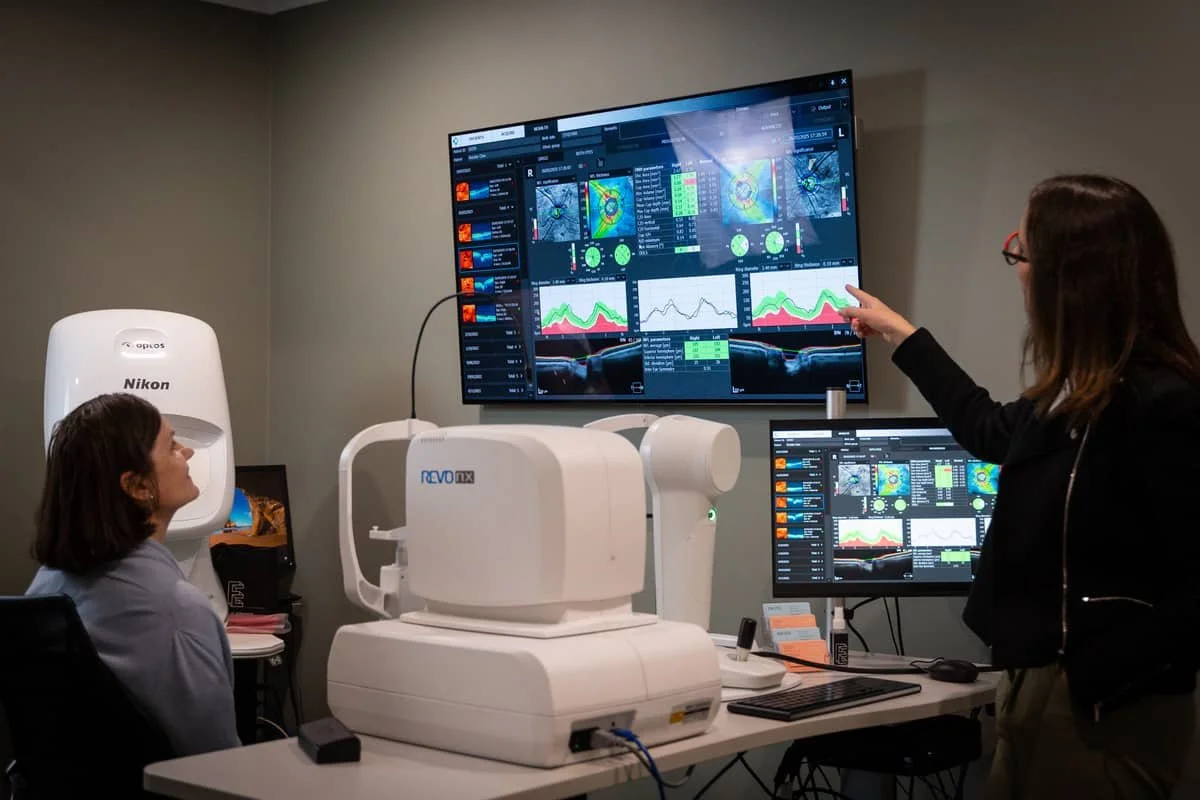
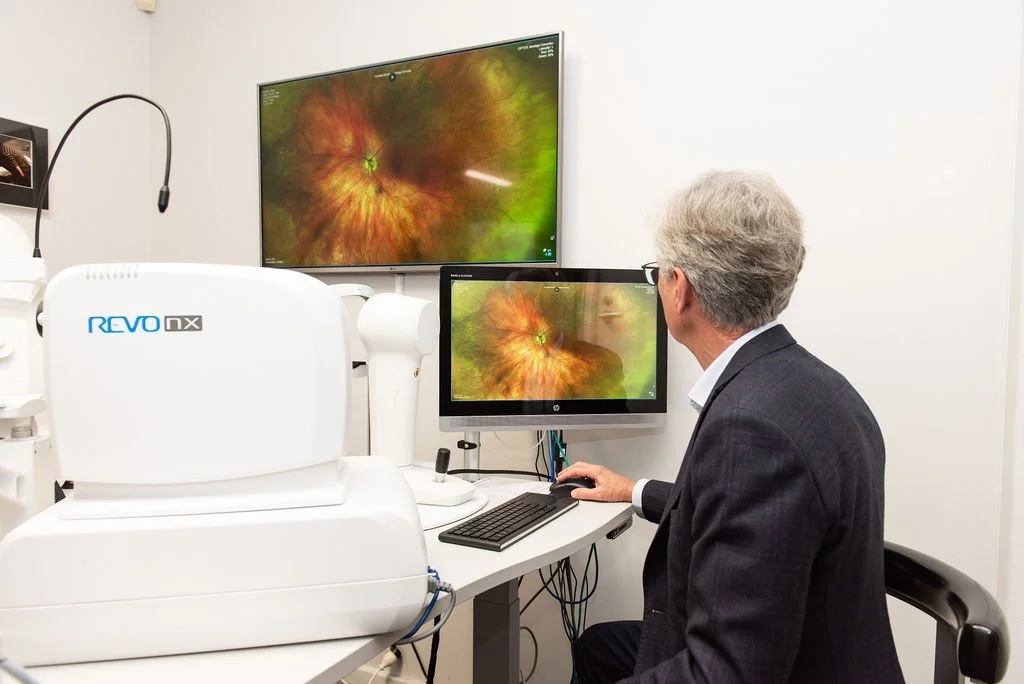
We provide services in myopia control, comprehensive eye tests, and personalised treatment plans. Our practice is equipped with advanced technology and state-of-the-art equipment to deliver exceptional care for your long-term eye health.
What is Myopia Control?
Myopia, or shortsightedness, is a common condition where the main symptom is blurred distance vision. The prevalence of myopia is increasing worldwide. In addition to the inconvenience of a lifetime of blurred vision, it carries the additional risk of eye diseases and vision loss in later life.
How can myopia be managed?
Methods that have gained support in the control of myopia:
MiyoSmart lenses in spectacles, which enable focus in both the central and mid-peripheral vision.
Orthokeratology (Ortho-K) which involves the use of individually designed contact lenses which gently mould the shape of the cornea.
Soft daily disposable contact lenses that are specifically designed to have a myopia controlling effect.
Eyedrops with Atropine. Low dose atropine eyedrops can be used to slow the progression of myopia with minimal side effects.
When, and how often, is an eye test required for Myopia Control?
Myopia progression can be slowed or halted in children and teenagers. Regular eye tests for your children are recommended from at least 4 years of age, or earlier if you have concerns.
For all eye tests, you can book online through our website. For any new patients, please complete the Welcome to For Eyes form (links under Eye Tests page) and either email to the practice at reception@foreyes.com.au or bring it with you on the day of the appointment.
Providing care throughout all stages of the myopia life cycle
A myopia management lifecycle follows a child from pre-myopia through stable adulthood, with different goals and tools at each stage. Here is a structured plan you can adapt with your eyecare professional.
Stages of the myopia lifecycle
-
The focus is on prevention with healthy visual habits and early risk screening, especially if there is a family history of myopia. Screening from about age 6, or earlier in high-risk children, is commonly recommended.
Goal: delay or prevent onset and reduce future degree of myopia.
Strategies: lots of outdoor time, limiting prolonged near work, appropriate working distance and lighting, plus regular eye exams to detect early changes.
Visual hygiene: practices designed to maintain health vision and prevent eye strain focusing on ergonomics, appropriate lighting and rest breaks.
-
Myopia usually appears and progresses fastest from about 7–10 years, then slows through the teens. This is when active myopia control treatments are most beneficial.
Goal: slow axial elongation and refractive progression as much as possible.
Strategies: evidence-based options include specialized spectacle lenses, myopia-control contact lenses (dual-focus/multifocal, orthokeratology), low-dose atropine, and in cases of rapid progression, low-level red-light therapy. Lifestyle advice continues in parallel.
-
Around half of children are stable by ~16 and about three-quarters by ~18, but some still progress into their 20s. Treatment decisions focus on whether progression has truly stopped and on long-term eye health.
Goal: confirm stability and decide whether to taper or continue treatment.
Strategies: monitor refraction and biometry to measure axial length to verify minimal change over at least 1–2 years, then consider step-down or continuing if progression persists or risk remains high.
-
Once stable, emphasis shifts to refractive options (spectacles, contact lenses, surgery) and monitoring for myopia-related eye disease, especially in higher prescriptions. Education then turns to the next generation (their children’s risk and prevention).
Goal: maintain visual function and minimize risk of complications (e.g., myopic maculopathy, retinal issues).
Strategies: regular dilated retinal exams, ultra-wide retinal scans, 6 monthly biometry to measure axial length progression and discussion of refractive surgery when stable, and ongoing lifestyle and workplace visual ergonomics.
Practical elements for a personal plan
With an eyecare professional, define:
Baseline risk profile: age, current prescription, axial length measurement, family history, visual environment.
Primary treatment modality (e.g., specialized glasses, orthokeratology or specific contact lens design, atropine concentration) and fallback options if goals are not met.
Follow-up calendar: initial safety checks, then 6-monthly reviews and annual detailed exams, with clear thresholds for “progression too fast” that trigger a change.
Document over time:
Refractive error at each visit, axial length where possible, and any side-effects or adherence issues.
Key decision points, such as switching modalities, tapering, or transitioning to adult care.
If you share the child’s age, current prescription, and whether contact lenses or drops are an option, a more tailored stage-by-stage plan can be sketched out around this framework.
At For Eyes Optometrist we provide comprehensive myopia care backed by clinical evidence, helping you and your child at every stage of the journey.
Spectacle Lenses for Effective Myopia Control
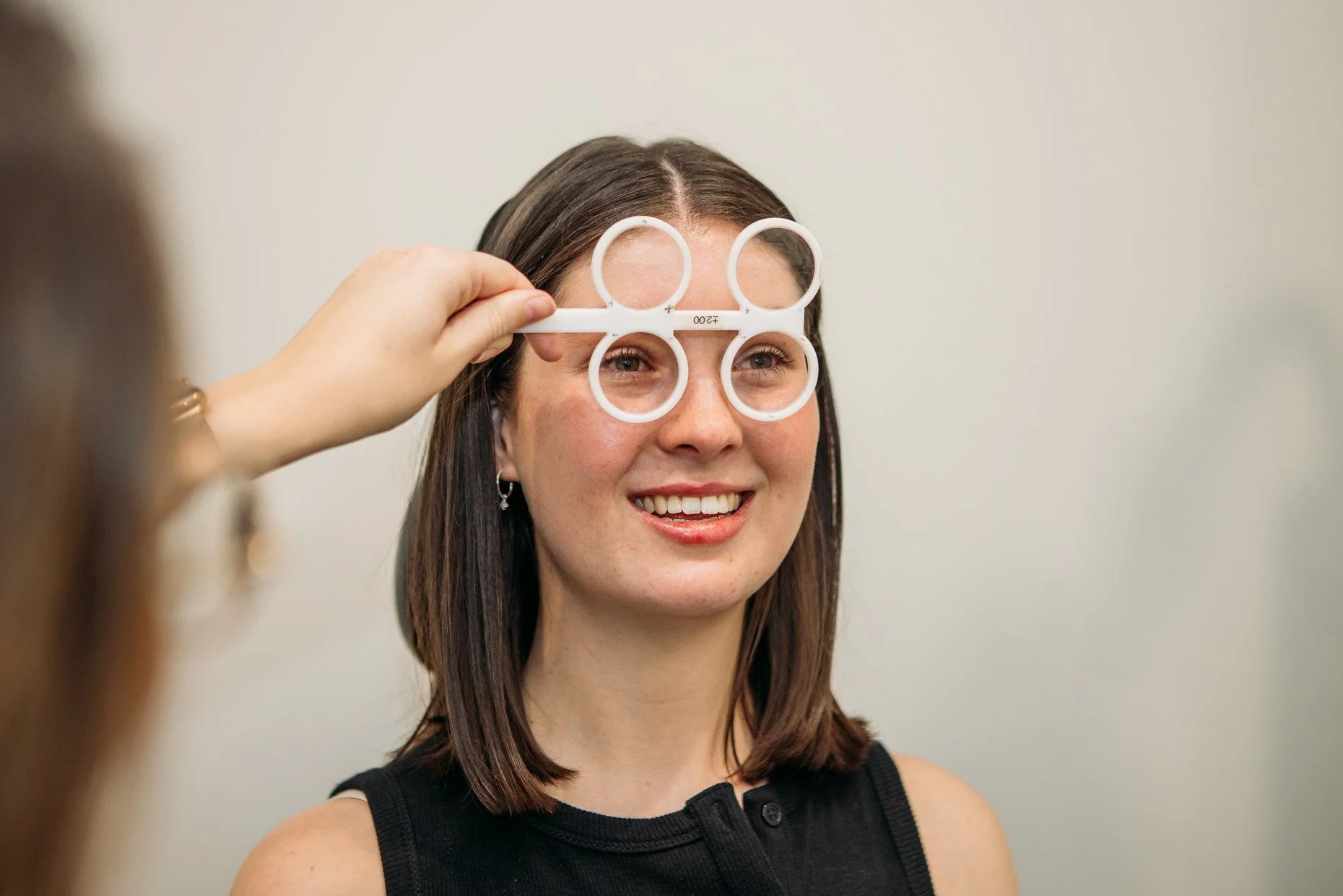
At For Eyes Optometrist, our Fremantle clinic team can select and advise on the most effective myopia control spectacle lenses based on clinical evidence.
Lenses for Myopia Treatment
-
![MiSight Contact Lenses]()
MiSight Contact Lenses
MiSight daily contact lenses by CooperVision correct vision and slow myopia progression. Comfortable, disposable, and clinically proven for safe, long-term myopia control in children.
-
![MiyoSmart Sun Lenses]()
MiyoSmart Sun Lenses
MiYOSMART Sun lenses by HOYA combine D.I.M.S. Technology with sun protection, reducing glare and UV exposure while slowing myopia progression for clear, comfortable outdoor vision.
-
![MiyoSmart Spectacle Lenses]()
MiyoSmart Spectacle Lenses
MiYOSMART spectacle lenses by HOYA use D.I.M.S. Technology to correct vision and slow myopia progression. They provide clear vision and manage myopia simultaneously.
-
![NaturalVue Contact Lenses]()
NaturalVue Contact Lenses
NaturalVue daily contact lenses by VTI use Neurofocus Optics® to correct vision and slow myopia progression. High peripheral plus power provides effective, non-invasive myopia control.




Why choose us?
Highly experienced team of myopia optometrists, orthoptists, vision therapists and optical dispensers.
Certified by the International Academy of Orthokeratology & Myopia Control
Comprehensive eye examination with the latest technologically advanced equipment.
Extensive myopia care experience with children from a very young age.
Complex contact lens fittings and advice including orthokeratology for myopia treatment, and capability to provide high power lenticular lenses
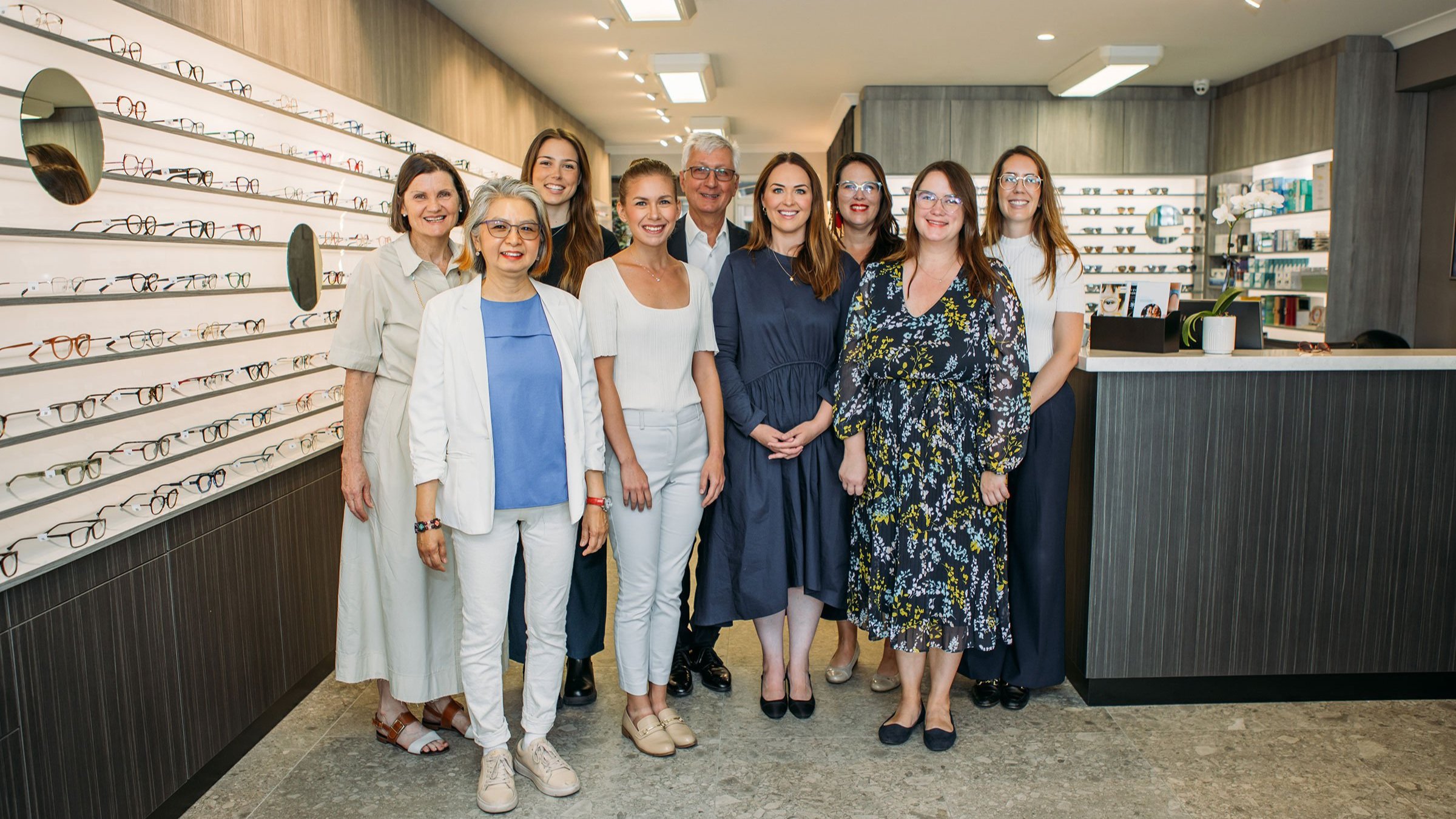
Meet the Optometrists
-
![]()
Adrian Rossiter
Founder / Optometrist
Adrian has over 35 years of experience as an optometrist in independent practice and as a family eye care practitioner. His professional interests revolve around improving children’s vision and working with specialty contact lenses for adults and children for myopia control and other vision impairments.
-
![]()
Sinead Denny
Optometrist
Sinead is passionate about all areas of Optometry including contact lenses, myopia control and Indigenous Eye Health. Sinead is also involved in running a Diabetic Eye Screening clinic at Fremantle Hospital and the supervision of students in the Doctor of Optometry at the University of Western Australia.
-
![]()
Hannah Jackson
Optometrist
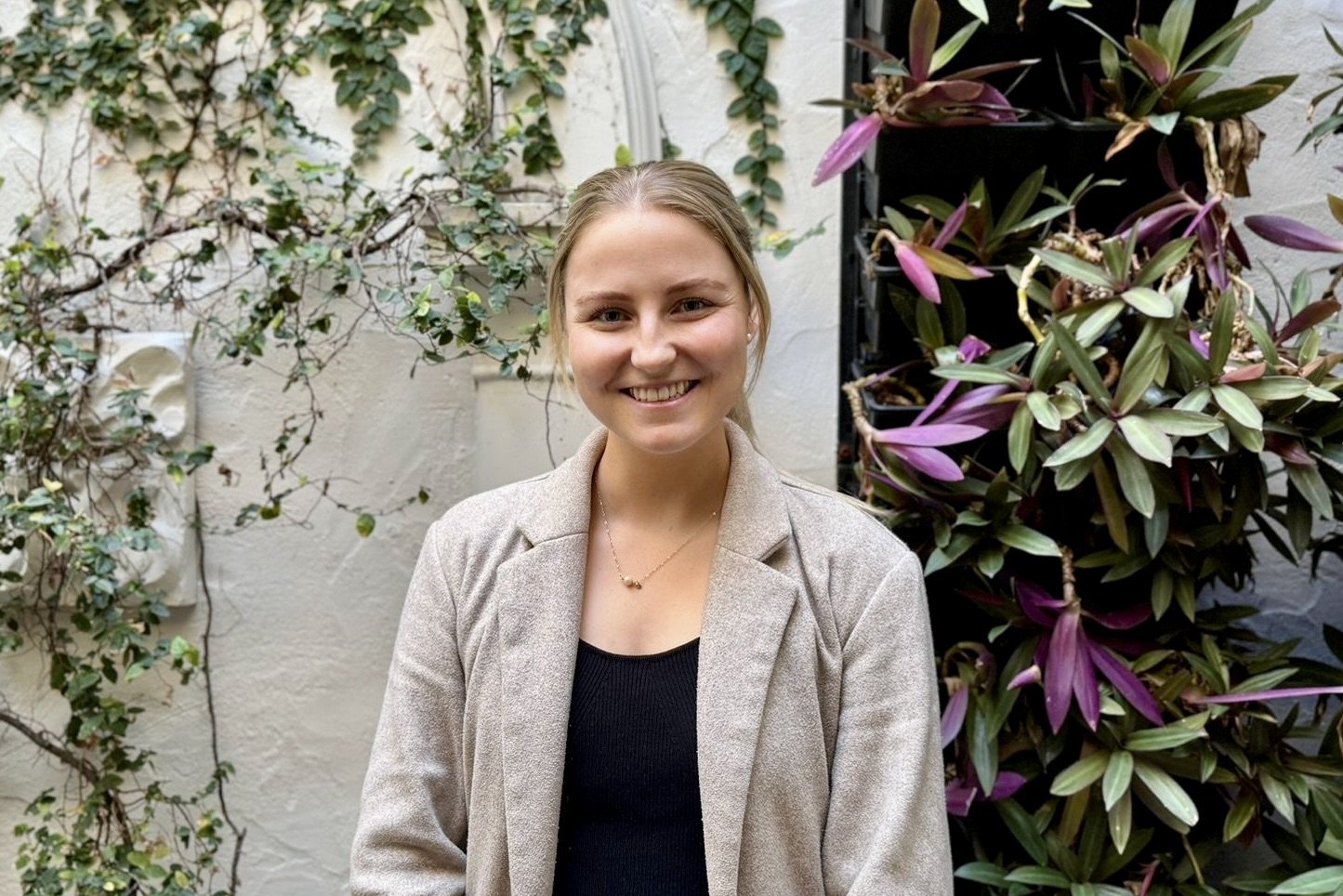
Hannah completed her Master of Optometry at Deakin University with distinction. She has a particular interest in paediatric optometry together with colour vision testing and low vision care. She holds an advanced certificate in children’s vision and is a CASA certified optometrist.


Myopia Control FAQs
-
Myopia is becoming more common in children around the world – the prevalence among Australian 12-year-olds doubled between 2005 and 2011 (source: https://www.mykidsvision.org/en-us). The increased use of electronic devices by children, and less outdoor activities, are all contributing to this trend.
Myopia in kids tends to progress or develop throughout childhood. Higher levels of myopia are associated with higher eye disease risks in adulthood. If your child already wears contact lenses or glasses, you can do something to stop their vision worsening. If they currently don't require any vision correction, you can assess their risk of developing myopia
-
In younger children, myopia progresses more quickly because their eyes are growing at a faster rate, leading to higher levels of myopia, stronger glasses and more eye health risks.
Adult onset myopia usually occurs as an adaptation to fatigued eye focusing muscles due to a significant increase in close work, such as university studies.
-
The first step is to have regular eye examinations for your children so their risk of developing myopia is assessed. Catching early signs of myopia before it fully develops can help slow onset and progression.
In addition, the following is recommended by our optometrists:
• Children should not spend more than two hours a day – in addition to school time – on close work such as reading, homework or screen-time
• When using a computer, ensure it is properly positioned to avoid eye strain and take regular breaks, even if that is looking up and across the room.
• Smart phones are popular for children and teenagers’ texting, social media, reading and games - but too much screen time is linked to myopia, can cause dry eyes, and increase the risk of eye damage and diseases in adulthood.
• The blue-white bright light from tablets and phones can affect sleep patterns. Therefore, these devices should be avoided before bedtime.
• Outdoor sport and play of at least 1-2 hours a day can reduce the risk of myopia. -
An IACMM-certified optometrist is an experienced eye care professional trained in managing myopia (short-sightedness), with certification from the International Academy of Orthokeratology and Myopia Control (IAOMC). They’ve completed advanced training, passed rigorous exams, and stay informed on the latest research for effective myopia management.
Benefits for Patients:
Enhanced Expertise: IACMM-certified optometrists have in-depth knowledge of myopia progression and use specialised diagnostic tools.
Personalised Treatment: They provide treatment plans designed to help slow myopia progression in children.
Verified Competency: This certification assures parents of the optometrist’s knowledge, with IAOMC verification and regular certification renewal.
Selecting an IACMM-certified optometrist offers reassurance of quality, research-backed myopia management for you or your child
-
It depends on the combination. Research suggests atropine with multifocal contact lenses doesn’t offer extra benefits over using either treatment alone.
The effectiveness of combination therapies varies, so personalised treatment under professional guidance is recommended.
-
Myopia control contact lenses don’t just correct vision—they actively slow down myopia progression. Studies show they can significantly reduce eye elongation, helping to lower the risk of long-term eye health issues. They’re a convenient, comfortable option for children as young as 7-8, offering freedom from glasses for sports and daily activities.
Research also suggests their benefits can last even after stopping treatment in the late teens.
If you're looking for an effective way to manage myopia while maintaining clear vision, contact lenses are a great option.
-
Yes, we can. Using advanced mapping technology, we measure the exact contours of your cornea to ensure a precise fit. This allows for better comfort, vision clarity, and effective myopia management tailored to your eyes.
-
No. At For Eyes, we are a private billing practice. This allows us to prioritising your eye health and gives us the ability to invest in advanced technology, training and spend the right time to understand your concerns.
Need to make an appointment?
Schedule an appointment directly with our clinic or contact us today using our online web form.