
Riding the WAVE: Our Team Returns Energised from Optometry Australia's WAVE 2026 Conference
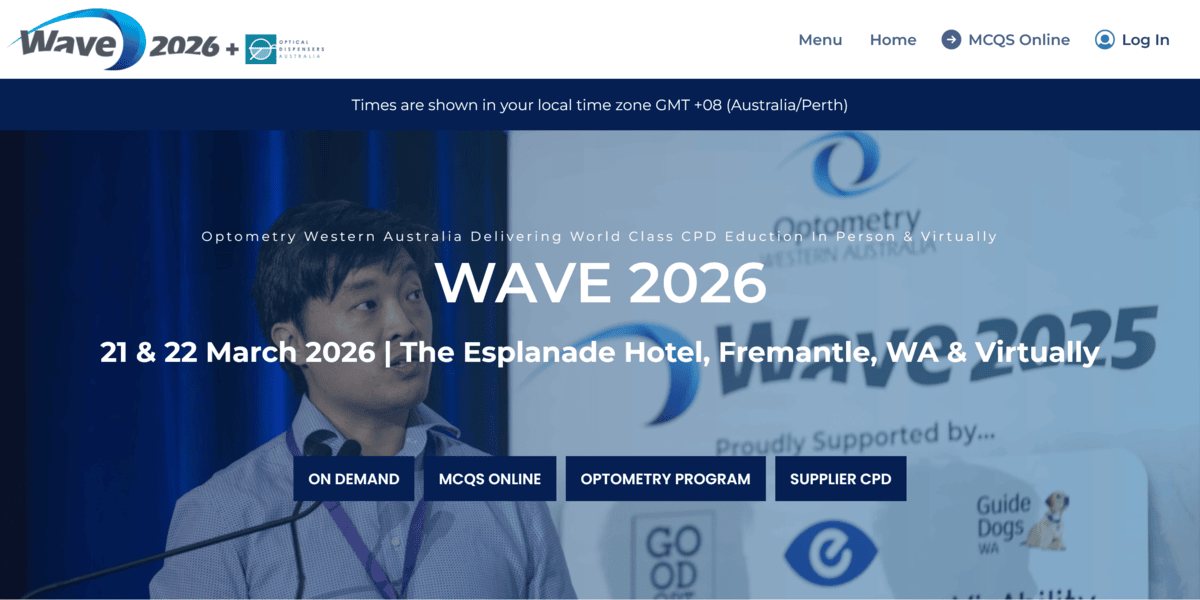
There's something quite special about a world-class conference being held right here in our own backyard. This year's WAVE 2026 Conference — the annual continuing professional development (CPD) event of Optometry Australia's Western Australian branch — was hosted at the iconic Esplanade Hotel in Fremantle, just a short walk from our practice.
For our team at For Eyes Optometrist, attending WAVE isn't just a professional obligation — it's one of the highlights of the year. Two days of learning, connecting, and being genuinely challenged by some of Australia's leading experts in eye care left us buzzing with ideas, insights, and renewed enthusiasm for everything we do for our patients.
What is the WAVE Conference?
WAVE is the flagship continuing professional development (CPD) event for optometrists across Western Australia, organised by Optometry Australia's WA branch. Each year it brings together clinicians from across the state — and leading experts from around the country — for an intensive programme of lectures, case presentations, and industry updates covering the full breadth of modern optometric practice.
This year's presenters were a genuinely impressive lineup: specialists in glaucoma, retinal disease, paediatric vision, myopia management, dry eye, neuro-optometry, corneal topography, and more. Whether you're an experienced clinician or newer to practice, there's always something at WAVE that shifts the way you think.
Why Does This Matter for Our Patients?
At For Eyes Optometrist, we've always believed that the best care comes from practitioners who never stop learning. Our team has dedicated areas of expertise — from Paediatric Optometry and Myopia Management to Neurological Optometry, Vision Therapy, Orthokeratology, Dry Eyes, Diabetic Screening, Optical Coherence Tomography, and Blepharitis Treatment — and staying at the cutting edge of knowledge in each of these areas takes real, ongoing commitment.
When we attend events like WAVE, we're not just collecting CPD hours. We're bringing back real, evidence-based insights that directly shape how we assess, counsel, and care for you and your family.
The Hot Topics of 2026
So, what is the optometry world talking about right now? Here's a flavour of the themes that dominated this year's conference — and why they matter to you.
Myopia: Treating It Earlier Than Ever
Myopia (short-sightedness) in children is a global health priority — and the conversation has moved well beyond simply prescribing glasses.
The 2026 WAVE conference featured dedicated sessions on pre-myopia — identifying children who are on track to become short-sighted before it happens — and on how to measure whether myopia management programmes are truly working for each individual child.
With tools like orthokeratology (overnight lenses that reshape the cornea), specialised daytime soft lenses like Abiliti, MiSight, and atropine eye drops, we now have more ways than ever to slow down myopia progression and protect children's long-term eye health.
Dry Eye: A More Personalised Approach
Dry eye disease affects millions of Australians, yet it's still often dismissed or undertreated.
A major highlight of this year's conference was the unveiling of the TFOS DEWS III framework — the latest global consensus on how to classify and treat dry eye.
The shift is away from a one-size-fits-all stepwise treatment ladder, and toward identifying what is specifically driving each patient's dry eye, then targeting treatment accordingly.
Sessions also explored the evidence for technologies like Intense Pulsed Light (IPL) in the management of Meibomian Gland Dysfunction — the most common underlying cause of dry eye.
Glaucoma: Earlier Intervention, Better Outcomes
Glaucoma remains one of the leading causes of preventable blindness worldwide.
This year, the conference explored what experts are calling a "paradigm shift" in glaucoma management — moving away from the traditional model of lifelong eye drops toward earlier, more targeted interventions including laser treatment (Selective Laser Trabeculoplasty) and minimally invasive surgery.
Attendees also received in-depth training on recognising and managing complications following glaucoma surgery — crucial knowledge for the co-management role that optometrists play alongside ophthalmologists.
Children's Vision and Learning
Clear eyesight is not the same as good visual processing — and that distinction can make a profound difference in a child's ability to learn and thrive at school.
Sessions on paediatric vision explored how visual processing deficits (difficulties with visual memory, spatial awareness, or figure-ground discrimination) can affect reading, writing, and mathematics, even when a child's eyes are technically healthy.
These sessions reinforced our commitment to looking beyond the standard eye test when assessing younger patients.
Concussion and the Visual System
This is a rapidly emerging area with significant implications for sport, occupational health, and neurological rehabilitation.
Up to 80% of patients who have experienced a brain injury or concussion will have some form of visual dysfunction — often involving difficulties with focusing, eye teaming, or light sensitivity. Yet these symptoms are frequently missed or misattributed.
Our expertise in Neurological Optometry and Vision Therapy places us in an ideal position to assess and manage these patients as part of a broader multidisciplinary care team.
Artificial Intelligence in Eye Care
AI is no longer a distant concept — it's entering optometric practice right now, particularly in the screening and detection of diabetic retinopathy, age-related macular degeneration, and glaucoma.
A dedicated session gave practitioners a balanced, evidence-based framework for understanding what AI tools can and cannot do, how to evaluate them critically, and how to integrate them responsibly into patient care.
For our diabetic retinal screening and OCT services, this is directly relevant knowledge.
Geographic Atrophy: A New Treatment Era
For patients with advanced age-related macular degeneration, geographic atrophy (GA) has historically had no treatment options.
That changed recently with the approval of a new therapy in Australia — and this year's WAVE featured a thorough clinical update on how to identify suitable patients, what the evidence shows, and how to update care protocols accordingly.
This is genuinely exciting news for a patient group that has long had limited options.
The Intersection of Cosmetics and Eye Health
From eyelash growth serums and anti-ageing treatments to dermal fillers and botulinum toxin injections around the eyes — cosmetic products and procedures are increasingly common and can have significant ocular implications that patients don't always connect to their eye health.
A session dedicated to this topic gave practitioners practical tools for asking the right questions and recognising when cosmetic use may be contributing to an array of ocular complications.
Better Care, Together
One of the recurring themes of WAVE 2026 was the importance of coordinated, team-based care.
Optometrists sit at the intersection of primary eye care and the broader health system — we're often the first clinician to identify signs of glaucoma, diabetes, neurological conditions, or systemic disease. What we do next — how we communicate, refer, co-manage, and follow up — can be genuinely life-changing for patients.
For GPs, paediatricians, neurologists, and other allied health practitioners: if you have patients with complex eye health needs, we welcome the opportunity to be part of their care team.
Our practitioners have advanced training across a wide spectrum of clinical areas, and we take co-management seriously — from clear referral letters and communication to systematic follow-up and appropriate escalation.
Our Commitment to You
At For Eyes Optometrist in Fremantle, we have three dedicated practitioners — each with a deep personal commitment to clinical excellence and ongoing professional development. WAVE is just one part of that commitment. Between conferences, we engage in peer review, specialist reading, and targeted clinical training to ensure that what we offer our patients reflects the very best of current evidence and practice.
Eye health is not static — the science evolves, the technology advances, and the expectations of what good care looks like continue to rise. Conditions that were once simply monitored can now be actively managed. Children who might previously have been sent home with a standard pair of glasses can now receive targeted intervention that protects their vision into the future. Patients with dry eye, concussion-related visual symptoms, or complex systemic conditions deserve practitioners who are committed to understanding the full picture.
We left WAVE this year with full notebooks, fresh perspectives, and — yes — genuine excitement about the future of eye care. We look forward to sharing that with every patient who walks through our door.
For Eyes Optometrist participates in Optometry Australia's continuing professional development programme. All clinical content in this blog reflects learnings from WAVE 2026 and is provided for general information only. For personalised clinical advice, please book a consultation.
