GP Referrals
Our dry eye clinic has access to qualified practitioners and advanced equipment for treating complex dry eye conditions.


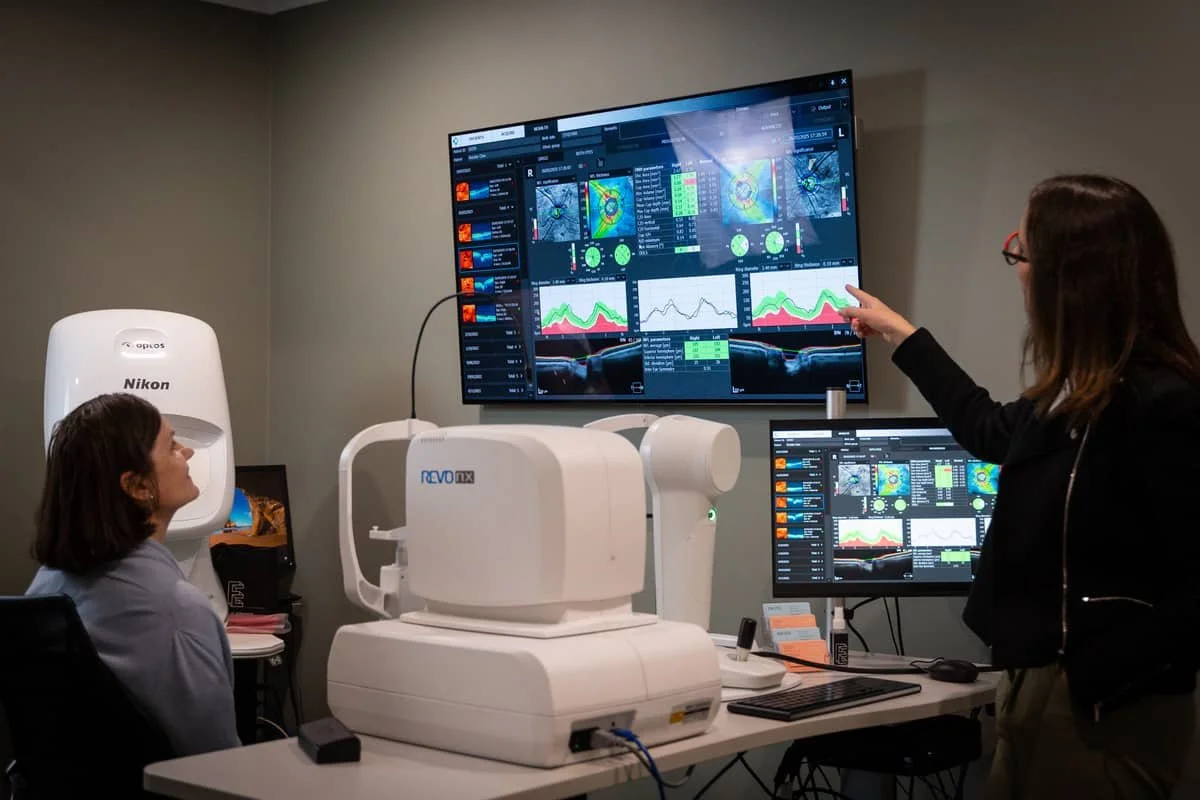
For Eyes Optometrist is an independent optometry practice in Fremantle with state of the art equipment and a passion for providing excellent eye care. Our optometrists have a wide scope of practice, and all are therapeutically endorsed.
Detecting children’s vision problems
The following signs indicate that your child needs to have their eyes examined:
Paediatric optometry
Myopia management (including axial length measurement)
Complex contact lens fittings (e.g. Orthokeratology and Scleral contact
lenses)
Neurological optometry
Diabetic retinopathy screening
Dry Eye Treatment (including IPL)
Occupational testing: CASA, colour vision, driving standards
Urgent and complex conditions we can diagnose and treat
-
Being short-sighted means your child can see objects clearly up close, but those further away appear blurred. This is a common condition, often identified around the age of 12, though younger children can also be affected.
-
Children who are long-sighted can see distant objects more clearly than those up close. They might experience blurred vision or tired eyes when reading. If your child has significant long-sightedness, it can be corrected with glasses.
-
Astigmatism is a minor eye condition that causes blurred or distorted vision. It happens when the cornea or lens is slightly irregular in shape, more like a rugby ball than a football. If left untreated, it can lead to headaches, eye strain, and tiredness, especially after activities like reading or using a computer. In most cases astigmatism can be treated with glasses or contact lenses.
-
If your child is diagnosed with a lazy eye (amblyopia), it means one eye is weaker than the other, causing them to rely more on their stronger eye.
Accurate and appropriate diagnosis of eye health conditions is essential.
Many ocular emergencies (e.g. red eyes, flashing lights, ocular trauma) require specialised equipment and clinical expertise to accurately diagnose and manage these patients.
Our practice has the equipment and knowledge to ensure patients receive accurate and timely care.
Advanced diagnostics and specialised equipment for complex eye assessments
-
The eye test will include consideration of the following:
1. Measurement of near focus and eye coordination. This can impact visual comfort and performance when reading, writing and using computers.
2. Measurement of distance focus and ability to change focus from distance to near work.
3. Assessment and treatment of lazy eye (amblyopia) and turned eye(strabismus). Assessment of tracking eye movement skills for reading fluency.
4. Assessment of vision perception, or processing, to ensure these abilities are normally developed for a patient’s age.
5. Assessment and management of visual issues associated with health or neurological conditions.
-
A child can be examined at any age, particularly if (as a parent) you are concerned. A good age to begin regular eye examinations for a child is around 4 years of age. That is, when they can sit still, pay attention and follow simple instructions. This is an important stage in a child’s development and when our optometrists can accurately assess if any vision problems exist and the best course of action,
Conditions such as the lazy eye (amblyopia), turned eye (strabismus), eye teaming, squint eye, and colour vision deficiencies are best detected at an early age to maximise their learning potential through school. At For Eyes, we will closely examine your child’s vision and determine whether their vision is normal or if some form of intervention is required.
Our children’s eye tests considers visual motor and cognitive skills, assessing both the functioning of the eyes as well as the brain.
The approach assesses how a child processes and interprets visual information and helps detect problems that may accompany or contribute to learning difficulties.
The way a child interprets what they see does not depend solely on the clarity of their vision.
Comprehensive eye examinations (can we word by saying the most advanced?)
Front of the eye diagnosis
To diagnose most anterior eye conditions, assessment with a slit lamp biomicroscope is required, providing a high-magnification, three- dimensional view of the eye. Some ocular signs that are difficult to diagnose without this technology include:
Foreign body depth & rust ring removal
Corneal infections & ulcers
Viral infections of the cornea (i.e. herpectic)
Anterior angle closure & eye pressure measurements
Iris changes or transillumination
Tear film instability & dry eye
Cataracts & other lenticular changes
Back of the eye diagnosis
Why choose us?
Highly experienced team of optometrists, orthoptists, vision therapists and optical dispensers.
Certified by the International Academy of Orthokeratology & Myopia Control
Comprehensive eye examination with the latest technologically advanced equipment.
Extensive myopia care experience with children from a very young age.
Complex contact lens fittings and advice including orthokeratology for myopia treatment
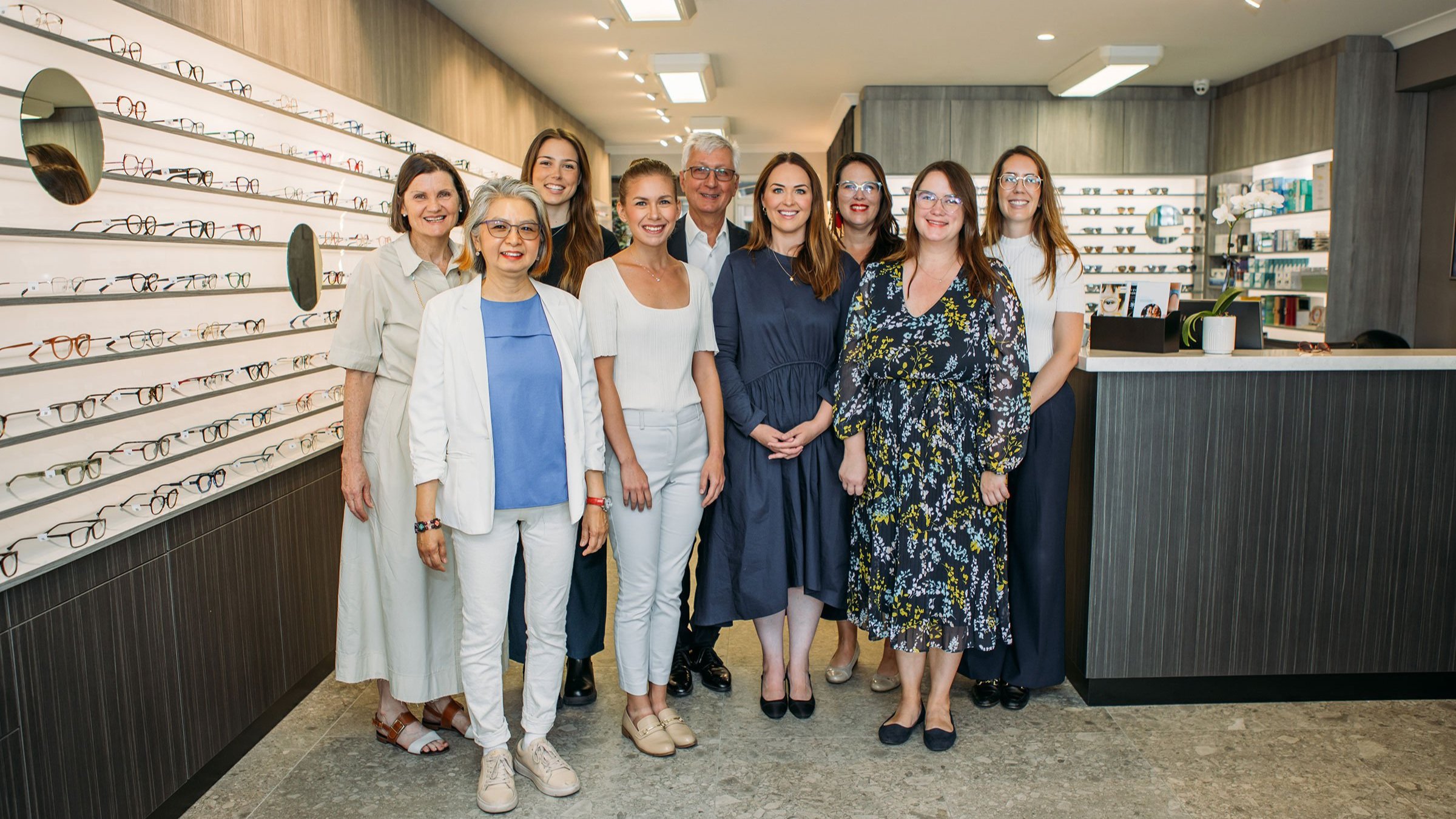
Meet the Optometrists
-
![]()
Adrian Rossiter
Founder / Optometrist
Adrian has over 35 years of experience as an optometrist in independent practice, as a contact lens adviser to industry and as a family eye care practitioner. His professional interests revolve around improving children’s vision and working with specialty contact lenses for adults and children.
-
![]()
Sinead Denny
Optometrist
Sinead is passionate about all areas of Optometry including contact lenses, myopia control and Indigenous Eye Health. Sinead is also involved in running a Diabetic Eye Screening clinic at Fremantle Hospital and the supervision of students in the Doctor of Optometry at the University of Western Australia.
-
![]()
Karen Walsh
Optometrist
Karen has 17 years experience as an optometrist across Ireland and Australia, in both independent and corporate settings. She is passionate about providing excellent care to all patients, and has completed a post graduate qualification in Advanced Paediatric Eye Care through the University of NSW.
-
![]()
Hannah Jackson
Optometrist
Hannah completed her Master of Optometry at Deakin University with distinction. She has a particular interest in paediatric optometry together with colour vision testing and low vision care. She holds an advanced certificate in children’s vision and is a CASA certified optometrist.